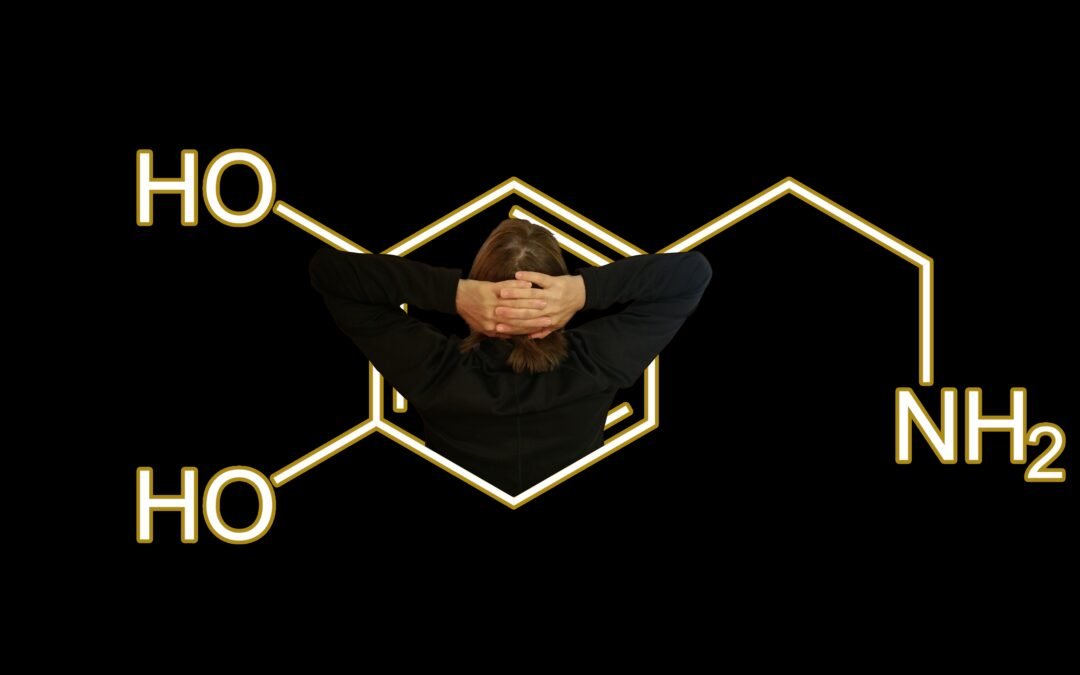
As chiropractors, we often speak about the nervous system as the master controller of the body. What is increasingly emerging in the scientific literature is that spinal function is not only about movement and pain—it may also influence deeper neurochemical systems, including the dopamine reward cascade.
This blog explores what current research suggests about the relationship between chiropractic spinal adjustments, the spinal cord, and dopamine-driven brain function—while staying grounded in what is known, what is hypothesized, and what still requires further study.
________________________________________
Understanding the Dopamine Reward Cascade
Dopamine is a neurotransmitter central to motivation, reward, mood, and motor control. It is most famously associated with brain regions such as the mesolimbic pathway, but its influence extends far beyond the brain.
Importantly:
• Dopamine pathways descend from the brain into the spinal cord
• The spinal cord itself contains dopamine-producing and dopamine-sensitive neurons
• Dopamine modulates movement, pain perception, and autonomic function
Research shows that the spinal cord is not just a passive conduit—it contains dopaminergic networks that directly influence reflexes and sensory processing.
Additionally, specialized cells capable of producing dopamine (AADC cells) are distributed throughout the spinal cord, suggesting local dopamine regulation at the spinal level .
________________________________________
The Spine as a Neurological Interface
Every spinal joint is richly embedded with:
• Mechanoreceptors (joint position sensors)
• Proprioceptors (movement awareness)
• Nociceptors (pain receptors)
These sensory inputs feed continuously into the central nervous system. When spinal joints become restricted or dysfunctional, the quality of sensory input to the brain changes.
This matters because:
The brain relies on accurate spinal input to regulate motor output, autonomic balance, and neurochemical signaling.
Altered input from dysfunctional joints can lead to maladaptive neuroplasticity—essentially, the brain wiring itself around distorted information.
________________________________________
What Happens During a Chiropractic Adjustment?
A chiropractic adjustment delivers a precise, high-velocity, low-amplitude force to a joint.
Neurologically, this creates:
• A rapid burst of sensory input to the spinal cord and brain
• Activation of mechanoreceptors
• Modulation of motor neuron excitability
• Changes in cortical (brain) activity
Research has demonstrated that an adjustment can:
• Alter brain activity related to pain processing
• Increase cortical drive to muscles, indicating enhanced brain–body communication
• Induce neuroplastic changes affecting pain, mood, and overall function
________________________________________
Linking Chiropractic Adjustments to the Dopamine System
While direct measurement of dopamine changes after chiropractic adjustments is still limited, several plausible neurophysiological pathways exist:
1. Sensory Input → Brain Reward Centers
The sudden influx of proprioceptive input from an adjustment may:
• Stimulate areas of the brain involved in reward and motivation
• Influence dopaminergic pathways indirectly through sensory–motor integration
This is similar to how exercise, touch, and novel stimuli can activate dopamine release.
________________________________________
2. Pain Reduction and Dopamine
Pain and dopamine are tightly linked.
• Chronic pain is associated with reduced dopamine function
• Relief of pain can normalize dopamine signaling
Adjustments have been shown to reduce pain perception (hypoalgesia)
This reduction in pain may:
• Decrease stress-related neurochemistry
• Allow dopamine pathways to rebalance
________________________________________
3. Autonomic Nervous System Regulation
The spinal cord houses sympathetic (fight-or-flight) neurons that are influenced by dopamine.
Research indicates:
• Dopamine modulates autonomic spinal circuits
Chiropractic care has been associated with changes in autonomic function (e.g., heart rate variability), suggesting a pathway where:
Adjustment → autonomic balance → dopaminergic modulation
________________________________________
4. Neuroplasticity and “Dopamine Homeostasis”
Emerging models propose that chiropractic care may contribute to “dopamine homeostasis”—a balanced reward system—particularly in chronic pain populations
Additionally, neuroplastic changes observed after chiropractic care suggest:
• Improved brain efficiency
• Better sensory integration
• Potential downstream effects on neurotransmitter regulation
________________________________________
The Bigger Picture: Brain–Spine Integration
Rather than viewing chiropractic adjustments as “bone moving,” modern neuroscience frames them as:
A powerful sensory input that can reorganize how the brain processes information.
Since dopamine systems are highly sensitive to:
• Sensory input
• Movement
• Pain states
• Autonomic balance
…it is biologically plausible that spinal adjustments influence the dopamine reward cascade indirectly through nervous system modulation.
________________________________________
What the Research Still Doesn’t Prove
It’s important to stay scientifically honest:
• There is limited direct evidence measuring dopamine levels after chiropractic adjustments
• Most connections are inferred through known neurophysiology and indirect findings
• More high-quality human studies are needed
However, the convergence of evidence from:
• spinal neurophysiology
• pain science
• neuroplasticity research
…strongly supports a meaningful neurological effect of spinal adjustments.
________________________________________
Clinical Implications
For patients, this evolving understanding suggests chiropractic care may influence more than pain:
• Mood and motivation
• Stress resilience
• Movement efficiency
• Overall neurological function
This may explain why many patients report:
• Feeling “lighter” or “clear-headed” after an adjustment
• Improved energy or mood
These experiences may reflect subtle shifts in the brain’s reward and regulatory systems.
________________________________________
Final Thoughts
Chiropractic care sits at the intersection of mechanics and neurochemistry.
While we are only beginning to understand the relationship between spinal adjustments and the dopamine reward cascade, the science points toward a compelling idea:
Optimizing spinal function may help optimize brain function—and potentially the chemistry that drives how we feel, move, and engage with life.